Mortgage Rates This Week: Freddie Mac Report, October 2026
Comes out: Thursday, October 1, 2026 at 12:00 p.m. ET
Published by: Freddie Mac
A new mortgage rate number comes out on Thursday, October 1, 2026 at 12:00 p.m. ET. It comes from Freddie Mac, a company backed by the government that helps fund home loans. Each week it reports the average rate on a new mortgage.
This is the number that sets your monthly payment. When the rate goes up, you pay more each month for the same house. When it goes down, you pay less. So it matters to anyone buying, selling, or holding a home in South Florida.
We are writing this before the number is out, so you can understand it the moment it lands. We will not guess the figure. We will show you what to watch for instead.
What this report actually measures
The report is called the Primary Mortgage Market Survey. That is a fancy name for a simple thing. Each week Freddie Mac asks lenders across the country what rate they are charging on a normal home loan. Then it takes the average.
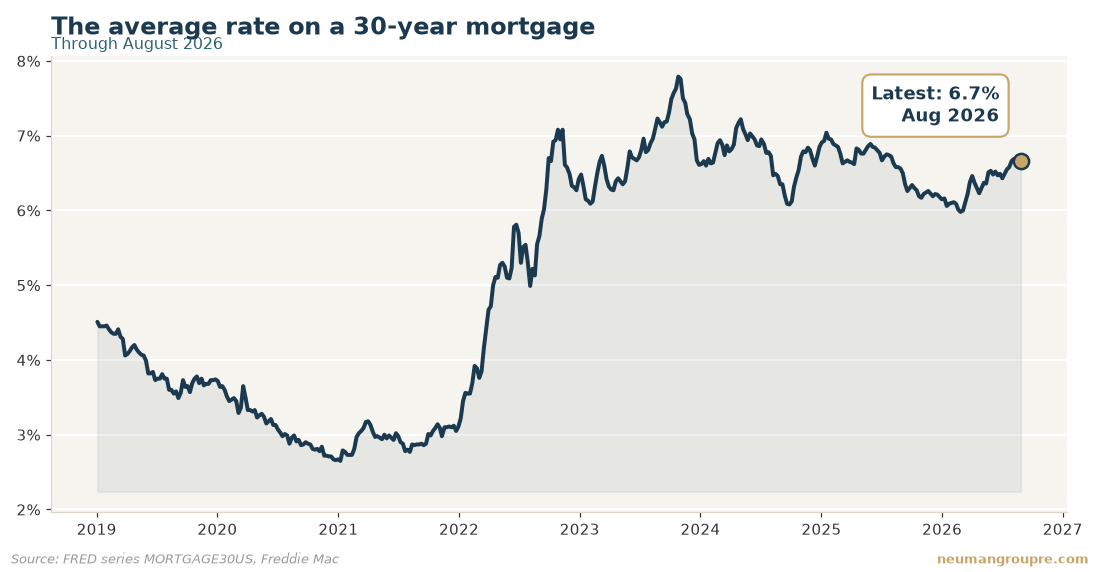
The main figure is the average rate on a 30-year mortgage. A 30-year mortgage is a loan you pay back over 30 years, and "fixed" means the rate never changes for the whole time. This is the most common home loan in America, so it is the one most people track.
What the charts show right now
The chart above shows the 30-year rate. The latest reading is 7.0% for September 2026. That is the same as the reading before it, so the rate has held flat lately. A year ago the rate was 6.4%. So compared to last year, borrowing to buy a home costs more today.
Why does a small move matter? Here is the plain math. Half a point higher on a $600,000 loan is real money every single month, for 30 years. A rate that looks close on paper can change your payment a lot over time.
What it means for your monthly payment
If the new number comes in higher, new loans get more expensive, and your monthly payment on a new home goes up. If it comes in lower, a new loan gets cheaper. If you already own your home and your rate is fixed, none of this changes your payment. It only affects a new loan or a refinance, which means trading your old loan for a new one at today's rate.
What it means for home prices in South Florida
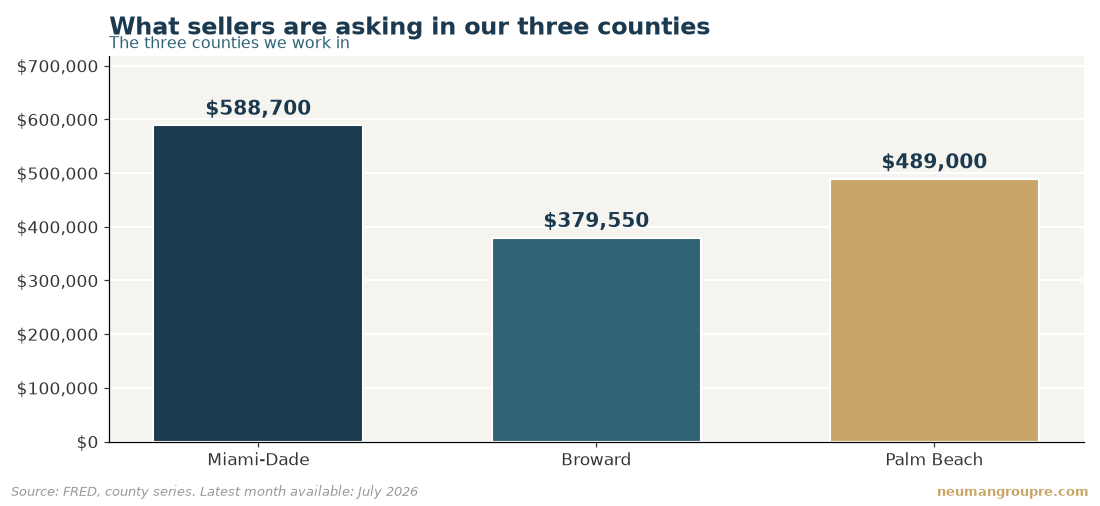
The second chart shows what sellers are asking in our three counties. In August 2026 the typical asking price was $589,000 in Miami-Dade, $380,000 in Broward, and $480,000 in Palm Beach.
All three are down from a year ago. Miami-Dade was $599,000. Broward was $400,000. Palm Beach was $485,000. When rates stay high, fewer people can afford to buy. That can push sellers to ask a little less, which is part of what these numbers show.
If you are buying
A higher rate shrinks how much house you can afford, because more of your payment goes to interest. A lower rate does the opposite. Watch the rate and the asking prices together.
If you are selling
High rates mean fewer buyers can stretch to your price. Asking prices in all three counties have come down over the past year. Pricing your home to match the market matters more when rates are up.
If you rent your place out
If you own a rental and your loan is already fixed, a rate move does not touch your payment. It can still shift demand. When buying is expensive, some people keep renting, which supports demand for rentals.
If you already have a mortgage
A fixed rate protects you. Your payment stays the same no matter what the new number says. A lower number could open a chance to refinance, but only if the drop is big enough to be worth the cost of a new loan.
The bottom line
Watch whether the 30-year rate moves up, down, or holds at 7.0%. Then think about which group you are in. That tells you what the number means for you.
Three things to watch
What sellers are asking in our three counties
| County | Now | A year ago | Direction |
|---|---|---|---|
| Miami-Dade | $589,000 | $599,000 | down |
| Broward | $380,000 | $400,000 | down |
| Palm Beach | $480,000 | $485,000 | down |
County figures from FRED, latest month published: August 2026.
Questions people ask
What are mortgage rates today?
The latest 30-year mortgage rate from Freddie Mac was 7.0% for September 2026. A fresh weekly number comes out on Thursday, October 1, 2026 at 12:00 p.m. ET. Check the chart above for the most recent reading.
What is the 30-year mortgage rate?
It is the average rate on a home loan you pay back over 30 years, with the rate fixed for the whole time. The latest reading was 7.0%. A year ago it was 6.4%.
Does a higher rate change my payment if I already own?
No. If your loan has a fixed rate, your payment stays the same no matter what the new number says. Rate moves only affect a new loan or a refinance.
Why does a small rate change matter so much?
Because the loan lasts 30 years. Half a point higher on a $600,000 loan adds real money to your payment every month for the life of the loan. Small moves add up.
What are homes asking for in South Florida right now?
In August 2026 the typical asking price was $589,000 in Miami-Dade, $380,000 in Broward, and $480,000 in Palm Beach. All three are down from a year ago.
Every figure on this page comes straight from FRED (Federal Reserve Economic Data, Federal Reserve Bank of St. Louis) — series MORTGAGE30US. We publish these before the report lands so you can read the background while it is still quiet, then we add the actual number here the moment it is out.
Call 954-228-5001 or ask us for a free read on your property.