CPI Report August 2026: What the Inflation Number Means
Comes out: Wednesday, August 12, 2026 at 8:30 a.m. ET
Published by: U.S. Bureau of Labor Statistics
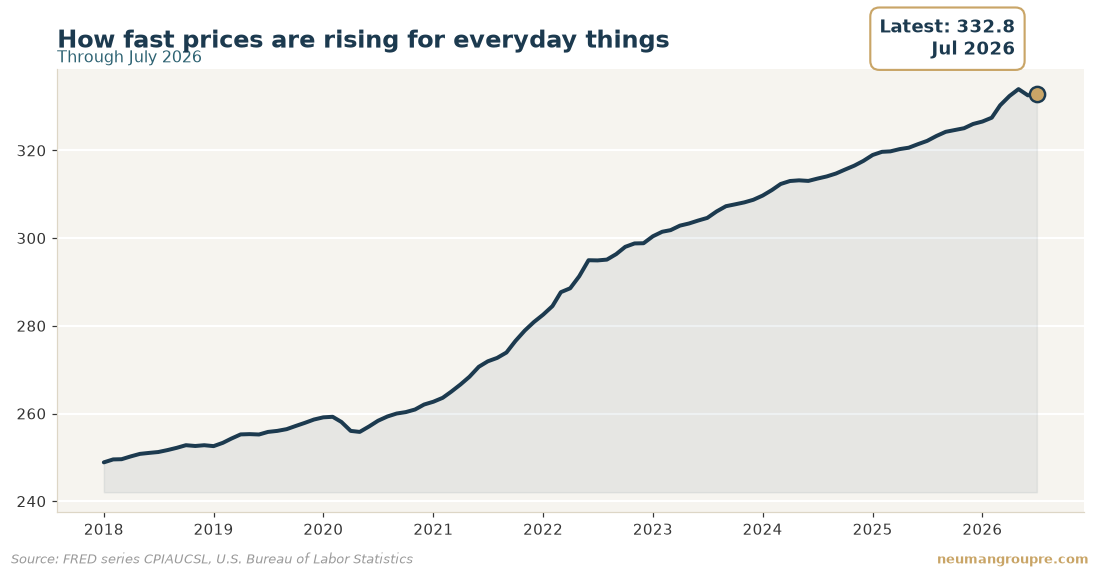
Inflation index reached 332.8 in July, about flat from June
The new inflation number is out. The Consumer Price Index measures how fast prices are rising for everyday things you buy. For July 2026 it came in at 332.8. Last month it was 332.6, so month to month prices were about the same.
Over the past year the picture is different. A year ago the index was 322.2. So compared with last year, prices are up.
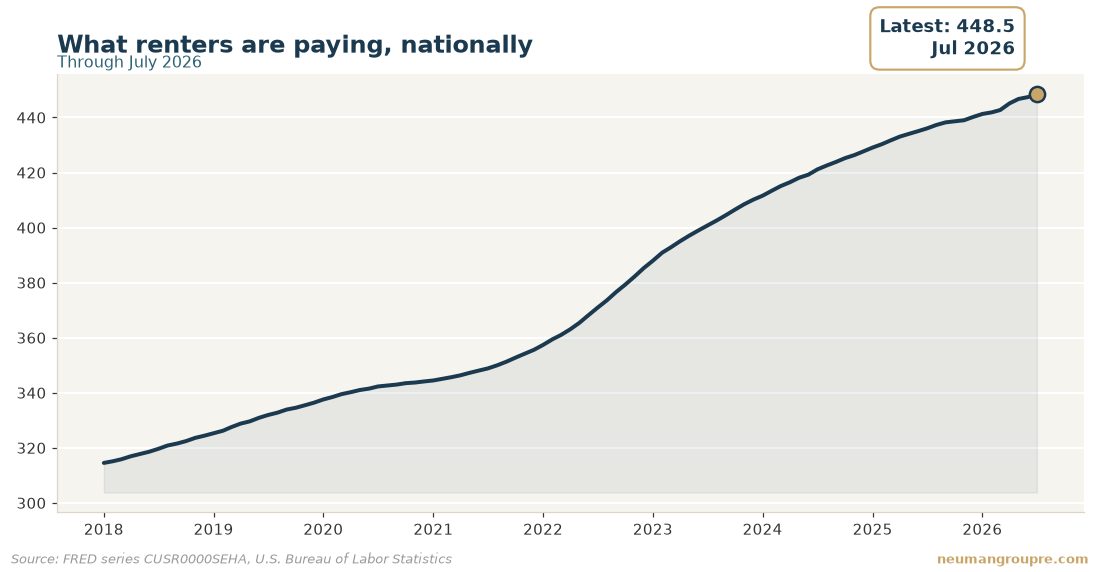
Rent has a similar story. The national rent index for July 2026 was 448.5. Last month it was 447.4, so rent was about flat month to month. A year ago it was 436.1, so rent is up over the year.
Here is why this matters if you are buying, selling, owning, or renting in South Florida. Inflation helps decide what happens with interest rates, and interest rates decide your mortgage payment. When inflation stays calm, like this month, it takes some pressure off rates. When it runs hot, rates tend to stay high. On a $600,000 loan, even a small change in the rate can move your monthly payment by a lot.
Bottom line: this month was quiet, not a big swing. That is not a signal to rush. If you want to know what today's numbers mean for your own home plans, call The Neuman Group at 954-228-5001.
A big report on prices comes out on Wednesday, August 12, 2026 at 8:30 a.m. Eastern time. It is called the Consumer Price Index, or CPI. The U.S. Bureau of Labor Statistics puts it out. It measures how fast prices are going up.
Here is why you should care, even if you do not follow the news. This report shapes what happens with mortgage rates. And mortgage rates shape your monthly payment on a home.
We wrote this before the new number came out. So when you read it, you can understand the number instead of just seeing a headline.
What this report actually measures
The CPI tracks the cost of everyday things. Think groceries, gas, rent, and other bills. The government checks these prices each month. Then it turns them into one number, called an index.
The index is not a dollar amount. It is a score that shows how prices have moved over time. When the score goes up, life is getting more expensive. When the score goes up slowly, that is called cooling inflation. When it climbs fast, that is hot inflation.
This matters for homes because of the Federal Reserve. The Federal Reserve is the country's central bank, and it sets a key interest rate for the whole economy. When inflation runs hot, the Fed tends to keep rates high to slow prices down. When inflation cools, the Fed has more room to let rates ease. Mortgage rates tend to follow that same path.
What the charts show right now
The chart above shows the national price index for all items. The latest reading is 332.6, for June 2026. That is down from 334.0 the month before. So prices dipped a little from one month to the next. But compared with a year ago, when it was 321.4, prices are still up.
The chart also shows what renters pay across the country. That reading is 447.4, up from 435.0 a year ago. From month to month it was about the same, moving only from 446.7. So rent is higher than last year, but it stopped racing up.
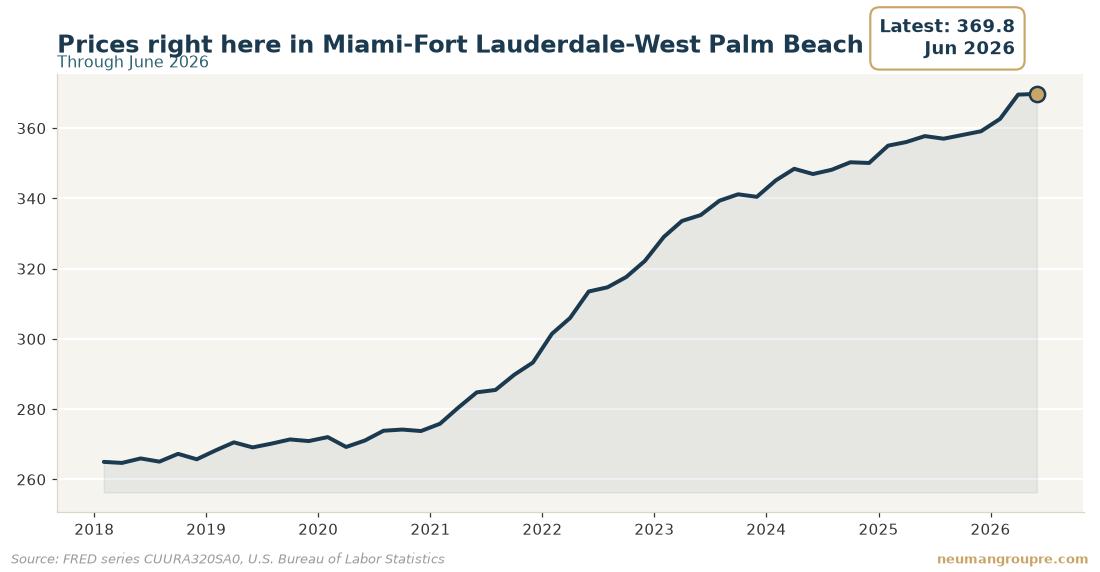
Closest to home, the chart shows prices for Miami, Fort Lauderdale, and West Palm Beach. That reading is 369.8. A year ago it was 357.8, so prices here are up over the year. But month to month it barely moved from 369.6. Local prices are high, yet they have leveled off lately.
What it means for your mortgage payment
Say you are borrowing $600,000 to buy a home. Your monthly payment depends a lot on your mortgage rate. Even a small move in that rate changes what you owe each month, and it adds up over 30 years.
A cool CPI number tends to help rates ease over time. That could make a payment more affordable. A hot number tends to keep rates high, which keeps payments high. This report is one clue about which way things are headed.
What it means for home prices
When rates stay high, fewer people can afford to buy. That can slow price growth or push sellers to negotiate. When rates ease, more buyers come back, and demand can firm up prices. So the CPI number does not set home prices, but it shapes the mood of the market.
What it means for rent in South Florida
Rent is a big piece of the CPI. The national rent reading is still above last year, but it has calmed down month to month. If inflation keeps cooling, rent increases may stay gentler. If it heats up, owners who rent out a place may feel pressure on costs, and renters may feel it too.
The bottom line
You do not need to guess tomorrow's number. Just watch which way it leans. A cooler number points toward easier rates over time. A hotter number points toward rates staying high. Both matter for anyone buying, selling, renting out, or paying off a home here.
Three things to watch
Questions people ask
What is the CPI report?
CPI stands for Consumer Price Index. It measures how fast prices are rising for everyday things like food, gas, and rent. The U.S. Bureau of Labor Statistics puts it out once a month.
When does the next CPI report come out?
It comes out on Wednesday, August 12, 2026 at 8:30 a.m. Eastern time. It will cover price data for the prior month.
How does inflation affect mortgage rates?
Inflation guides the Federal Reserve, the country's central bank. When inflation runs hot, the Fed tends to keep interest rates high. When it cools, rates have more room to ease. Mortgage rates tend to follow.
What was the latest inflation reading?
The national all-items index was 332.6 for June 2026. That was down from 334.0 the month before, but still up from 321.4 a year earlier. The new number arrives August 12.
What does this mean for South Florida homes?
Local prices in Miami, Fort Lauderdale, and West Palm Beach were 369.8 in June 2026, up over the year but flat month to month. A cooler national number could ease rates over time, while a hotter one could keep payments high.
Every figure on this page comes straight from FRED (Federal Reserve Economic Data, Federal Reserve Bank of St. Louis) — series CPIAUCSL, CUSR0000SEHA, CUURA320SA0. We publish these before the report lands so you can read the background while it is still quiet, then we add the actual number here the moment it is out.
Call 954-228-5001 or ask us for a free read on your property.