Fed Rate Decision September 2026: What to Watch Today
Comes out: Wednesday, September 30, 2026 at 2:00 p.m. ET
Published by: Federal Reserve
Fed's key interest rate holds at 3.9% in September 2026
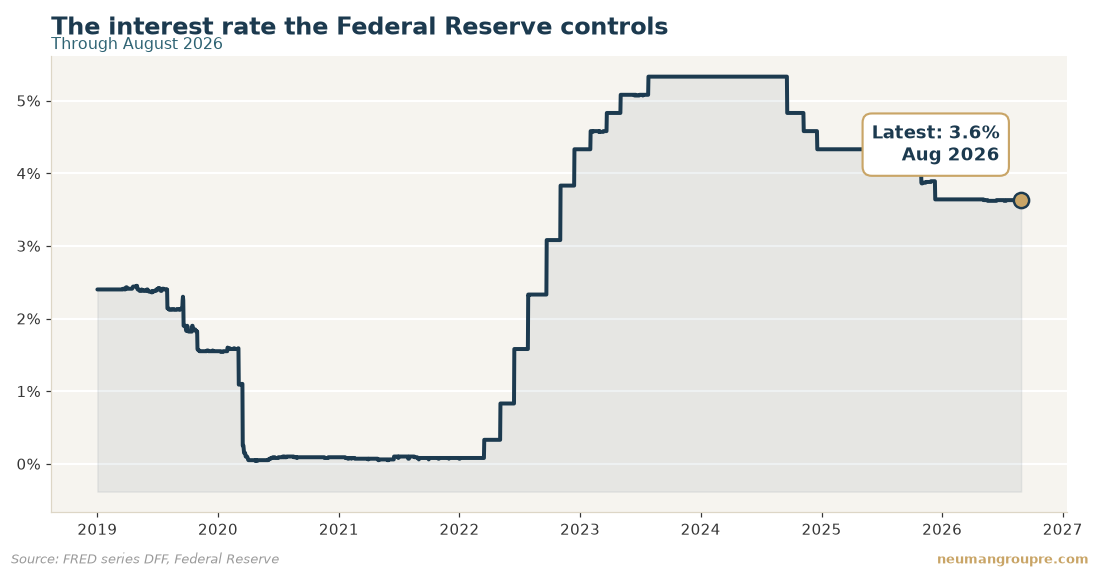
The Federal Reserve is the group that sets the country's main interest rate. That rate, called the Federal Funds Effective Rate, is now 3.9% for September 2026. This is the rate banks pay to borrow money from each other, and it shapes the cost of borrowing across the whole economy.
The rate is about the same as last time, when it was also 3.9%. A year ago it was 4.1%, so it is down from where it stood twelve months ago.
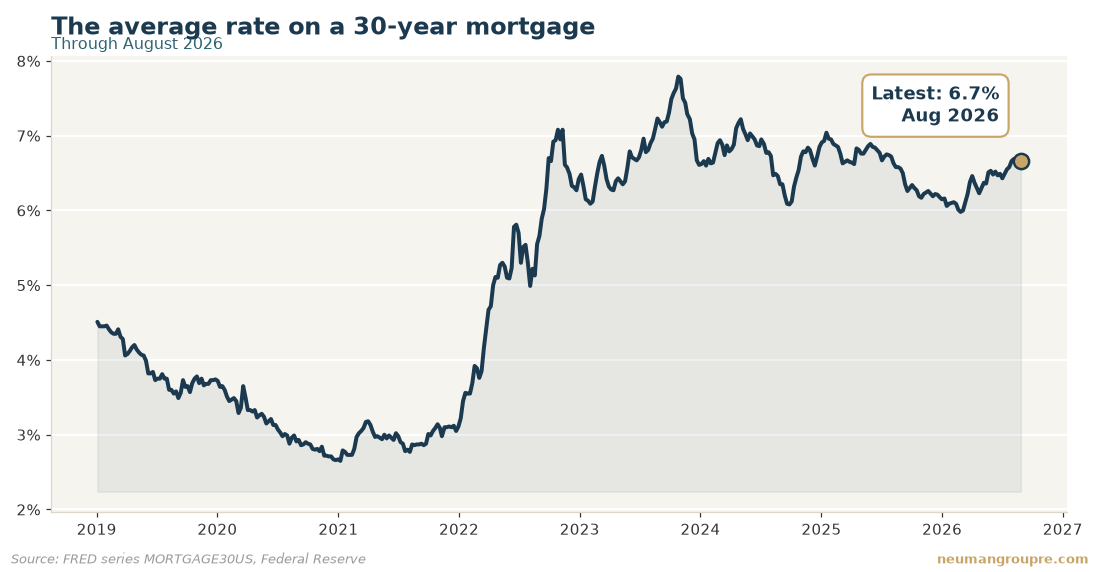
The Fed does not set mortgage rates itself. But it sets the mood. What it says about the future often moves mortgage rates the same day. Right now the average rate on a 30-year home loan is 7.0%, the same as last time and up from 6.4% a year ago.
Here is what this means for you in South Florida. Because the Fed held steady instead of raising or lowering, home loan rates are not being pushed in either direction today. If you are buying, a higher loan rate makes your monthly payment bigger, so a steady rate at least keeps that cost from climbing further. If you are selling, calmer rates can help buyers plan and keep making offers.
If you own a home or rent, this news mostly affects timing. A flat rate gives everyone a moment to plan without a sudden jump in borrowing costs. Questions about how this fits your own move? Call The Neuman Group at 954-228-5001.
On Wednesday, September 30, 2026 at 2:00 p.m. Eastern Time, the Federal Reserve will announce its next decision on interest rates. The Federal Reserve, or the Fed for short, is the government body that helps guide the cost of borrowing money in the United States.
The Fed does not set your mortgage rate. But what it says usually pushes mortgage rates up or down that same day. So this one afternoon can change what a home loan costs in South Florida.
This page explains what is coming, in plain words, before the number is out. When the decision lands, you will already understand what it means for you.
What this decision actually is
The Fed controls one main interest rate. It is called the federal funds rate, which is the rate banks pay to borrow from each other overnight. When the Fed raises that rate, borrowing money gets more expensive across the whole economy. When it cuts that rate, borrowing gets cheaper.
The Fed can do one of three things. It can raise the rate, cut the rate, or leave it flat, meaning no change at all. Just as important is what the Fed says about the months ahead. Those words often move mortgage rates even before the Fed acts again.
What the charts show right now
The chart above shows the rate the Fed controls. As of September 2026 it sits at 3.9%. That is about the same as last time, also 3.9%. A year ago it was 4.1%, so over the past year this rate has moved down a little.
The chart above also shows the average rate on a 30-year fixed mortgage, which is the most common home loan. Right now that average is 7.0%. That is the same as last time. But a year ago it was 6.4%, so mortgage rates are up over the past year, even though the Fed's own rate went the other way.
That gap is the key lesson. The Fed's rate and your mortgage rate do not always move together. The Fed sets the mood. The market decides the rest.
What it means for your mortgage payment
Your monthly payment is very sensitive to the rate. On a $600,000 loan, even a small change in the rate can move your payment by a real amount each month, and by tens of thousands of dollars over the life of the loan. That is why one afternoon at the Fed matters to your wallet.
If mortgage rates ease after this decision, a buyer can afford a bit more home for the same monthly payment. If rates climb, the same payment buys less. If you already have a fixed-rate loan, your rate does not change no matter what the Fed does today.
What it means for home prices
Home prices and rates pull against each other. When rates go up, monthly payments rise, and fewer buyers can stretch to the asking price. That can cool prices or slow how fast homes sell. When rates fall, more buyers can afford to jump in, which can hold prices up or push them higher.
In South Florida, where demand for homes stays strong, rate moves often show up first as changes in how quickly homes sell, not always as big price swings.
What it means for rent
Rent is tied to this too. When it costs more to buy, more people keep renting instead. That keeps demand for rentals high. If you own a place and rent it out, higher borrowing costs also make it pricier to buy your next property or to refinance the one you have. Lower rates can ease both of those pressures.
The bottom line
You do not need to guess the number. Watch two things at 2:00 p.m. ET on Wednesday: whether the Fed changes its rate, and what it signals about the future. The words often matter more than the move itself. If you are buying, selling, or renting out a home in Miami-Dade, Broward, or Palm Beach, we can walk you through what the decision means for your plan.
Three things to watch
Questions people ask
Will the Fed cut rates on September 30, 2026?
No one knows for sure until 2:00 p.m. Eastern Time that day. The Fed can raise, cut, or leave its rate flat. Its rate is currently 3.9%, the same as last time.
Does the Fed set my mortgage rate?
No. The Fed sets its own short-term rate, which is 3.9% right now. Your mortgage rate is set by the market. The two often move in the same direction, but not always. Over the past year the Fed's rate went down while the average 30-year mortgage went up to 7.0%.
What is the federal funds rate in plain words?
It is the rate banks pay to borrow money from each other overnight. When the Fed moves it, borrowing across the economy gets cheaper or more expensive. Right now it is 3.9%.
How does this affect home prices in South Florida?
Rates and prices push against each other. Higher rates raise monthly payments, so fewer buyers can reach the asking price. Lower rates let more buyers afford more, which can support prices.
I already have a fixed-rate mortgage. Does this change my payment?
No. A fixed-rate loan keeps the same rate for its whole term. The Fed's decision does not change your monthly payment. It mainly affects people getting a new loan or a variable-rate loan.
Every figure on this page comes straight from FRED (Federal Reserve Economic Data, Federal Reserve Bank of St. Louis) — series DFF, MORTGAGE30US. We publish these before the report lands so you can read the background while it is still quiet, then we add the actual number here the moment it is out.
Call 954-228-5001 or ask us for a free read on your property.