Fed Rate Decision August 2026: What It Means for You
Comes out: Sunday, August 2, 2026 at 2:00 p.m. ET
Published by: Federal Reserve
On Sunday, August 2, 2026 at 2:00 p.m. Eastern Time, the Federal Reserve will announce its next decision on interest rates. The Federal Reserve, often called the Fed, is the part of the government that sets the country's main interest rate.
This decision matters to you even if you never read financial news. The Fed does not set mortgage rates by itself. But what it says usually pushes mortgage rates up or down the same day.
This page explains what the report is, what the numbers look like right now, and what each possible outcome could mean for your money here in Miami-Dade, Broward, and Palm Beach.
What this report actually is
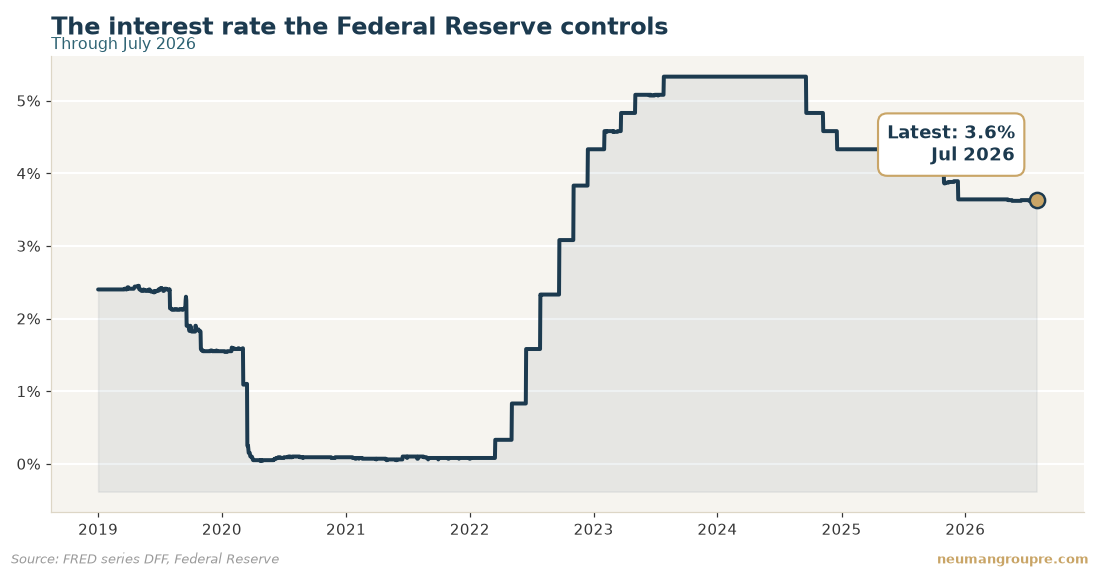
The Fed controls one key interest rate. It is the rate banks charge each other to borrow money overnight. Its official name is the Federal Funds Effective Rate. When the Fed moves this rate, the cost of almost all other borrowing tends to follow, including car loans, credit cards, and home loans.
The Fed meets several times a year. At each meeting it does one of three things. It can raise the rate, lower the rate, or leave it flat. On August 2 it will tell us which one it chose, and it will explain why.
What the charts show right now
The chart above shows the Fed's key rate. It sits at 3.6% as of July 2026. That is about the same as the time before, when it was also 3.6%. A year ago it was higher, at 4.3%. So over the past year the Fed's rate has come down, and lately it has held flat.
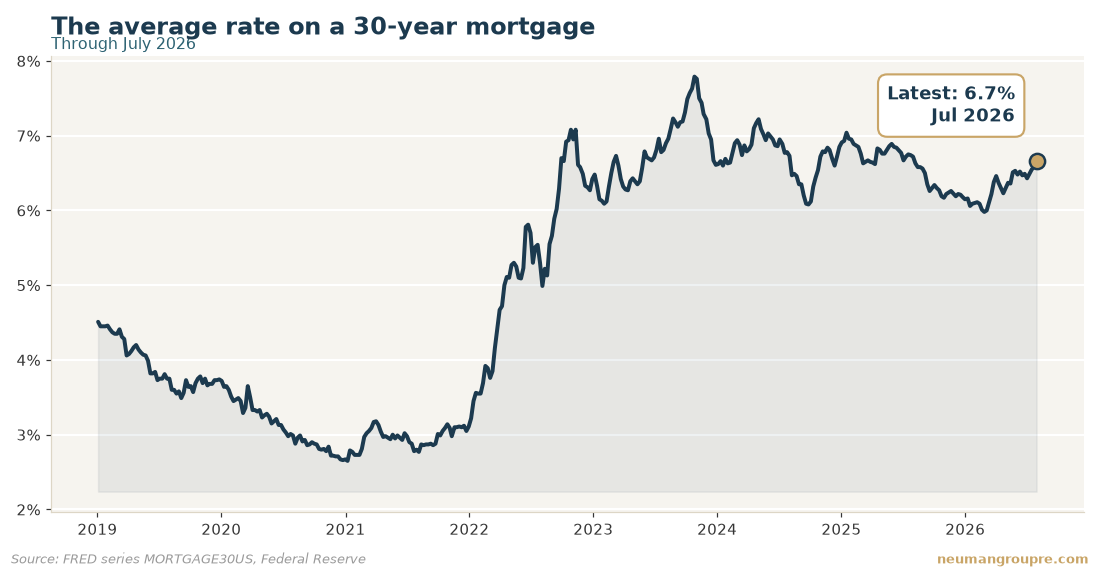
The second chart shows the average rate on a 30-year fixed mortgage, which is the most common home loan. That rate is 6.7% as of July 2026. It was 6.6% the month before, so it ticked up a little. A year ago it was 6.4%, so it is up over the year too.
Notice something important. The Fed's rate went down over the past year, but mortgage rates went up. That is the reminder that the two are not the same. Mortgage rates follow the mood and the outlook, not just today's Fed rate.
What it means for your mortgage payment
Small moves in the mortgage rate change your monthly payment. Picture a $600,000 home loan. Going from 6.6% to 6.7% adds roughly $40 to the monthly payment before taxes and insurance. That is about $480 a year. Over 30 years, small differences add up to real money.
If the Fed sounds calm and hints that lower rates could come later, mortgage rates may ease in the days after. If the Fed sounds worried about prices going up, mortgage rates may rise. Watch the tone, not just the number.
What it means for home prices
When borrowing gets cheaper, more buyers can afford to shop. More buyers competing for the same homes tends to hold prices up or push them higher. When borrowing gets more expensive, some buyers step back, and price growth can slow. In South Florida, where many buyers pay cash or come from out of state, this pull is real but softer than in some other parts of the country.
What it means for rent
Rent and mortgage rates are linked in a quiet way. When it costs more to buy, more people keep renting instead. That steady demand can keep rent firm. It also shapes what landlords do. A person renting out a place with a loan on it feels higher rates directly, because their own costs go up.
The simple takeaway
- The Fed sets the mood; mortgage rates react to it.
- Right now the Fed's rate is flat and mortgage rates are slightly up.
- Watch what the Fed says about the future, not only what it does today.
If you are trying to decide whether to buy, sell, or refinance around this decision, it helps to run your own numbers before the announcement. Reach out to The Neuman Group at 954-228-5001 and we can walk through what a rate move would do to your specific plan.
Three things to watch
Questions people ask
Does the Fed set mortgage rates?
No. The Fed sets its own key rate, the rate banks charge each other. Mortgage rates are set by the market. But they usually move in reaction to what the Fed does and says, often the same day.
When exactly does the decision come out?
On Sunday, August 2, 2026 at 2:00 p.m. Eastern Time. The Fed releases a written statement, and it explains the reasons behind the choice.
Should I wait to buy until after the announcement?
There is no way to know the number ahead of time, so trying to time it is a gamble. Focus on whether the monthly payment fits your budget today. If a small rate change would break your plan, the plan may be too tight either way.
Why did mortgage rates go up while the Fed's rate went down?
Because they are not the same thing. The Fed's rate is 3.6% now, down from 4.3% a year ago. The average 30-year mortgage is 6.7%, up from 6.4% a year ago. Mortgage rates follow the outlook, not just today's Fed rate.
How much does a small rate change matter?
More than most people think. On a $600,000 loan, moving from 6.6% to 6.7% adds roughly $40 a month, or about $480 a year. Over the life of the loan, small differences become large sums.
Every figure on this page comes straight from FRED (Federal Reserve Economic Data, Federal Reserve Bank of St. Louis) — series DFF, MORTGAGE30US. We publish these before the report lands so you can read the background while it is still quiet, then we add the actual number here the moment it is out.
Call 954-228-5001 or ask us for a free read on your property.